
A Complete Guide on How to Hire a Fintech Designer for Your Product

13minutes read
hire fintech designer

Hiring strong fintech design talent has never been easy, but the pressure today is on a different level. Close to 90% of tech leaders admit they struggle to recruit and keep skilled people, and anyone building a financial product can feel that reality firsthand. The situation inside financial services is even more concerning. The recent Automation & AI Readiness report gave the industry a readiness score of just 58.3 out of 1,600. It’s a clear sign that most teams still don’t have the digital skills they need to move at the pace customers expect.

When security-first design feels like a barrier, it pushes people away. The right fintech UX designer knows how to build trust without creating friction and turn complex finance tools into intuitive experiences. Securing this specific expertise requires a targeted approach. Below is a clear guide to finding that perfect fit.

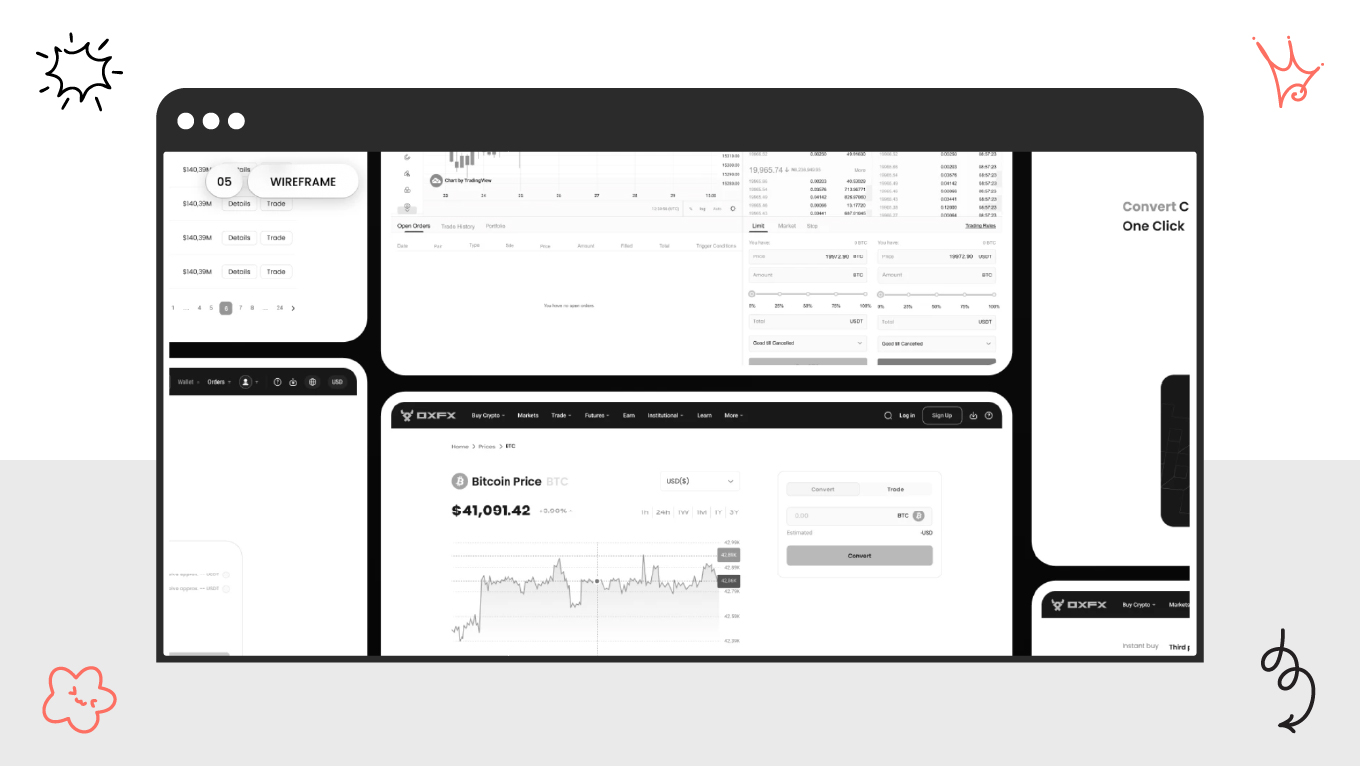
Case Study: How We Built a Trading Experience for OXFX

The OXFX project illustrates exactly why the specific expertise is non-negotiable. The challenge was a familiar one in crypto trading: platforms feel like complex cockpits. Our skilled UX designers balanced real-time data and security cues with clarity. This turned an overwhelming interface into an approachable tool, proving that power and simplicity can coexist.

What the Product Needed

OXFX wanted a platform that works smoothly on any device and supports:

  • flexible payment methods

  • spot, futures, and margin trading

  • income tracking and comparison

  • real-time charts and live market data

  • quick and painless onboarding

It had to look clean, move fast, and help users feel safe from their very first tap.

Where the Challenge Was

The hardest part wasn’t the interface itself; it was the amount of information that needed to live inside it. Crypto traders jump between charts, order books, assets, and actions constantly. Beginners, on the other hand, need guidance without being pushed away by complexity. Finding that balance required a lot of iteration, testing, and honest conversations with the OXFX team.

How We Approached the Solution

We focused on building a design that behaves the way traders think:

  • the essentials always stay visible

  • data updates in real time without feeling noisy

  • every step (deposit, trade, withdraw) feels predictable and secure

  • advanced tools stay accessible but don’t overwhelm new users

Our design turned the platform into a single workspace where users can manage transactions, read the market, and make decisions without switching environments or hunting for information.

What Happened After Launch

The shift was visible right away. By prioritizing clarity, the platform became faster and safer to use. This boost in trust translated directly into longer sessions and more confident interactions. 

Here’s what we saw:

  • 96/100 user satisfaction

  • 10 minutes average session time

  • +11% conversion rate

  • +16% organic traffic growth

  • 2.5-second load time

These numbers made it clear that thoughtful fintech design does more than “look good”—it builds confidence, reduces hesitation, and keeps people coming back.

Transform your product with Gapsy — contact us for a collaboration.

What a Fintech Designer Does

A fintech UX designer does far more than polish screens. This role sits at the critical intersection of finance, psychology, and technology. The designer's decisions directly determine if a user feels safe enough to stay. It is less about decoration and more about building trust.

From our work across trading platforms, banking apps, payment tools, and investment products, here’s what a fintech product designer does day to day.

They translate complex financial logic into something people understand

Money is emotional, and financial interfaces are often intimidating. A fintech designer takes complicated flows, like onboarding, KYC, deposits, trading, or risk notifications, and turns them into steps that feel clear, safe, and manageable. The goal is to help users make informed decisions without second-guessing every click.

They design for trust

In fintech, trust is built in the pixels. It lives in the spacing, microcopy, and security cues. Fintech designers meticulously shape these details to ensure the interface feels calm and reliable, specifically when users are handling sensitive financial data.

They learn and work with financial rules

Regulations, compliance, KYC requirements, risk warnings, data retention, and transaction visibility all shape how screens behave. A web designer for fintech understands these constraints and works with product and legal teams to build flows that stay compliant without breaking the user experience.

They visualize data in a way that reduces cognitive load

Charts, price movements, positions, fees, limits, income tracking—users need a lot of information, but not all at once. A fintech product designer structures data so it’s readable at a glance, meaningful when explored deeper, and never overwhelming.

They collaborate closely with engineers

Fintech products are complex machines running on APIs, banking rails, and blockchain infrastructure. A designer should have the technical awareness to navigate these constraints. This ensures that concepts don't just look good in a mockup, but function in development.

They keep users safe without slowing them down

Address whitelisting and withdrawal holds are necessary, but they shouldn't stop the flow. Fintech design weaves the security steps into the journey seamlessly. Instead of a barrier, security becomes a gentle guide, keeping the experience safe without testing user patience.

They design for edge cases most industries never think about

Bad news needs good design. Whether it’s a bank failure or a blocked transaction, the interface cannot afford to be confusing. This ability to deliver sensitive information with absolute clarity is what defines an experienced fintech designer.

Fintech Designer vs. Traditional UI/UX Designer

Not every UI/UX designer is ready to work in fintech, and the differences between these roles are much bigger than they seem at first glance. Fintech products operate under unique pressures—security, regulation, financial accuracy, and user trust—so the skill set looks quite different from traditional design work. 

Here’s a quick comparison to show what sets fintech designers apart.

Area

Fintech Designer

Traditional UI/UX Designer

Core Focus

Designs products where money, trust, and regulation shape every interaction.

Designs general digital experiences without heavy financial or compliance constraints.

User Psychology

Deeply considers user anxiety, risk perception, and the emotional weight of financial decisions.

Focuses on convenience, usability, and aesthetics without financial stress factors.

Complexity Handling

Simplifies multi-step financial flows (KYC, onboarding, trading, payments, investments).

Works with simpler or more predictable user journeys.

Data Visualization

Builds clear, reliable visualizations for real-time data, charts, transactions, balances.

Creates visualizations when needed, but usually not tied to regulatory or financial accuracy.

Security & Compliance

Designs within strict rules: KYC/AML, 2FA, encryption cues, risk disclosures.

Security matters, but rarely drives design decisions to the same extent.

Collaboration Needs

Works closely with legal, compliance, financial analysts, and backend engineers.

Primarily collaborates with product managers and developers.

Technical Awareness

Understands trading engines, payment rails, banking APIs, authentication flows.

Technical foundation varies, but rarely includes financial infrastructure.

Error States & Edge Cases

Designs for failures that carry real consequences: declined payments, blocked accounts, price spikes, liquidity issues.

Handles standard UX errors like form validation or loading states.

Trust-building Cues

Pays attention to micro-details that signal safety—copy, timing, motion, hierarchy.

Trust-building matters, but less tied to financial risk perception.

Impact on Business

Directly influences user retention, transaction volume, regulatory compliance, and brand credibility.

Impacts general user satisfaction but with lower risk implications.


Key Skills and Traits of a Good Fintech Designer

Fintech design demands a very specific blend of abilities, and not all designers naturally grow into this niche. The products move fast, the stakes are high, and users expect absolute clarity at every step. To handle that environment well, a fintech designer needs a set of skills and personal qualities that go beyond standard UI/UX work. Here’s what matters.

Technical expertise

Fintech products involve complex technologies, data management, and security considerations. Designers should have a solid understanding of various technical aspects to collaborate with developers effectively, ensure the practicability of their design concepts, and address potential challenges. Let’s see some technical aspects fintech designers should understand:

fintech designer technical awareness
technical aspects fintech designer must understand
  • API integration. Fintech platforms may integrate with third-party services such as payment gateways, banking APIs, and data providers. Designers should understand how these integrations work to develop interfaces that seamlessly incorporate these functionalities, as the design they create can directly affect usability.

  • Data encryption. Fintech platforms carry a lot of sensitive data. That’s why designers should be aware of encryption protocols, data storage practices, and other security measures to protect user data. Implementing all the necessary information and educational sources in the design is better.

  • Authentication. Strong authentication and identity verification mechanisms are integral parts of fintech applications. Designers must understand various authentication methods, including biometrics and two-factor authentication (2FA), to implement them in design.

Blockchain technology. This knowledge can be beneficial depending on the specific fintech product. Blockchain and cryptocurrencies are gaining popularity today, so integrating them into your fintech platform could be practical. It’s especially crucial for products related to digital assets and blockchain-based transactions.

User-centricity

Fintech designers must deeply understand the people they design for. Money-related tasks often carry stress or uncertainty, so a user-centric mindset helps create experiences that feel clear, supportive, and trustworthy. Key aspects include:

  • Empathy for users’ financial situations — recognizing their goals, worries, and emotional triggers.

  • Simplifying complex processes — turning multi-step actions like onboarding, KYC, payments, or trading into intuitive, guided flows.

  • Designing with emotions in mind — creating interactions that feel calm, predictable, and reassuring.

  • Clear and helpful communication — using straightforward instructions, prompts, and feedback to reduce confusion.

  • Prioritizing usability and safety — ensuring users feel confident and protected while managing their finances.

Cross-functional collaboration

Great design is a team sport. Because every decision must satisfy technical constraints and strict laws, fintech designers act as the bridge between developers, lawyers, and stakeholders. Aligning these diverse business priorities requires a specific set of collaborative skills:

why is collaborative nature important
collaborative skills for a fintech designer
  • Effective communication. Designers should deliver their design concepts and ideas to team members with varying backgrounds. It facilitates shared understanding and alignment.

  • Cross-functional teams. Fintech designers work alongside developers, UI/UX researchers, product managers, compliance officers, and potentially legal experts. Collaboration across these roles ensures all product aspects are considered.

  • Design handoff. Clarity prevents chaos. A smooth developer handoff relies on detailed design specifications. By documenting every UI element and interaction, the team ensures that the final build matches the vision without the guesswork.

  • User experience alignment. Collaboration with UX researchers ensures the design decisions align with user behavior, preferences, and needs, contributing to a better overall user experience.

  • Conflict resolution. Friction is part of the process. Instead of avoiding disagreement, skilled designers use conflict resolution to sharpen ideas. This ensures that final decisions are battle-tested and stronger because of the debate.

Success in fintech means satisfying three masters: the user, the code, and the law. A collaborative mindset bridges these gaps, ensuring that fintech products are compliant with regulatory requirements, as well as built genuinely user-friendly.

Compliance Awareness

Fintech designers work in an environment where every screen must respect industry rules and protect users. A good fintech UX designer understands how regulations shape the product experience and designs with those boundaries in mind. Key elements include:

  • Awareness of financial regulations — understanding KYC, AML, GDPR, PSD2, and other standards that directly affect user flows.

  • Designing compliant user journeys — building onboarding, verification, and transaction flows that meet legal requirements without overwhelming users.

  • Accurate handling of sensitive information — presenting data in ways that support transparency while respecting privacy rules.

  • Clear risk disclosures — ensuring users understand fees, limits, risks, and important notices to avoid confusion or legal issues.

  • Working closely with compliance teams — aligning design decisions with legal expectations from the earliest stages.

Design for Trust and Security

Fintech design lives or dies on user trust. The product must feel safe, transparent, and reliable from the very first interaction. Effective fintech designers create that feeling through intentional visual and functional choices. This includes:

  • Consistent, predictable interaction patterns — reducing friction and uncertainty in critical moments like payments or identity checks.

  • Clear communication of security measures — showing when data is protected, how transactions are verified, and what users should expect next.

  • Thoughtful use of visual cues — typography, spacing, colors, and microcopy that reinforce safety rather than causing stress.

  • Friendly handling of errors — explaining issues in plain language and guiding users through resolutions without panic.

  • Balancing safety with ease of use — keeping authentication and verification strong but not heavy-handed, so users don’t feel discouraged.

Want to review your platform’s UX? Get a consultation from Gapsy Studio.

Best Practices for Hiring Fintech Designers

Fintech hiring carries higher stakes than standard design roles. It demands a rare mix: a professional who can balance strict compliance and security with genuine user empathy. To avoid expensive missteps and secure this specific talent, teams need a targeted approach.

1. Identify the Exact Skills You Need

Before reviewing applications, be clear about the type of designer you’re looking for. Fintech spans multiple product types—trading, banking, payments, budgeting, crypto, lending—and each requires slightly different expertise.

Here’s what helps:

  • Define whether you need a UX-focused, UI-focused, or product designer.

  • Clarify whether experience in your specific fintech niche is a must-have or nice-to-have.

  • Outline the complexity of your flows (onboarding, KYC, transactions, dashboards, analytics, etc.).

The clearer the expectations, the easier it is to filter candidates who match your actual needs.

2. Review Relevant Portfolio Work

A good fintech portfolio should show more than polished UI. Look for designers who can:

  • Explain why they made certain decisions.

  • Break down complex flows clearly.

  • Show examples of secure onboarding, verification, payments, dashboards, or data handling.

  • Communicate how they addressed user trust, financial stress points, or risk awareness.

If the portfolio is visually strong but conceptually shallow, that’s a red flag.

3. Conduct Interviews Around Real Scenarios

Instead of asking generic design questions, anchor conversations in real product situations. For example:

  • “How would you simplify a multi-step KYC flow without weakening security?”

  • “How would you help users understand why a transaction is pending?”

  • “How do you visualize financial data without overwhelming the user?”

These questions reveal how candidates think about trust, clarity, and compliance—core fintech challenges.

4. Check Testimonials and References

A designer’s previous teams often reveal the most valuable insights. Ask references about:

  • How well they communicated with engineering and compliance teams

  • How they handled complex flows or unexpected product constraints

  • Their approach to feedback and iteration

  • Their reliability with timelines and handoffs

Fintech projects move quickly and require tight alignment, so professionalism is as important as skill.

5. Provide a Practical Design Task

A task doesn’t need to be long or complicated, just realistic.

Example assignments:

  • Redesigning a transaction confirmation screen

  • Creating a simplified KYC step

  • Visualizing a small set of financial data

  • Improving clarity for a payment failure state

Speed is a poor metric for quality. The true value lies in the reasoning behind the decisions. A strong evaluation focuses on clarity and the candidate's ability to navigate complex factors like trust and risk, revealing the depth of their thinking rather than just their pace.

6. Observe How They Collaborate With Your Team

Fintech designers work closely with product managers, engineers, compliance specialists, and sometimes legal advisors. During the hiring process, pay attention to how they:

  • Explain design choices

  • Ask clarifying questions

  • Handle trade-offs

  • Navigate complexity without getting defensive

The ability to collaborate calmly and confidently often predicts long-term success more than technical skill alone.

7. Assess Culture Fit and Long-Term Thinking

Exceptional design plays the long game. Instead of focusing on isolated screens, a skilled fintech designer builds for the user's enduring relationship with the product. This strategic depth is visible when a candidate:

  • Care about user trust and emotional comfort

  • Understand the weight of financial decisions

  • Are comfortable designing for edge cases and “what if?” moments

  • Think about scalability and consistency

A UI/UX designer in fintech with this mindset becomes a true partner, not just a task executor.

8. Compare Hiring Models

Every team has different needs:

  • In-house designer — strong for ongoing product growth.

  • Freelancer — flexible for quick improvements or experiments.

  • Design agency — ideal for end-to-end redesigns or expert-level execution under tight timelines.

Choosing the right model early avoids delays and misalignment later.

Get in touch to discuss your project.

Where Can You Hire Fintech Designers?

You can hire a fintech designer from various sources and platforms that cater to creative professionals, design experts, and industry-specific talent. Here’s a list of places where you can find a potential candidate:

  • Job boards and websites. General job boards like LinkedIn allow you to post job listings for fintech designers.

  • Design-specific platforms. Platforms like Behance and Dribbble allow you to browse portfolios and connect with experienced designers. Some designers on these platforms specialize in fintech design.

  • Design agencies. They often have a range of designers with various specialties, including fintech design. You can approach agencies to find a designer who matches your requirements.

  • Freelance platforms. Freelance websites like Upwork offer a pool of freelance designers, some of whom have experience in fintech design.

  • Referrals and networking. Ask for recommendations from colleagues, friends, and industry contacts. Networking events, online forums, and social media platforms can help you connect with potential candidates. 

Ensure to communicate your requirements in job listings and during the interview process to attract the right talent for your fintech design projects.

How Much It Costs to Hire a Fintech Designer

Bringing a fintech designer for hire onto your product is an investment in clarity, trust, and long-term product stability. To choose the right person (or team), it helps to understand what affects the cost and which engagement model fits the stage your product is in. Below is a practical, founder-friendly breakdown that avoids vague generalities and focuses on how these decisions play out in real fintech teams.

What Drives the Cost

As fintech design is not a “standard UI/UX”, few things tend to influence rates more than anything else:

  • Depth of fintech experience. Designers who already understand onboarding, transactions, dashboards, KYC, or trading flows can skip the learning curve and get it right faster, which naturally commands higher rates.

  • Complexity of your product. A simple budgeting tool and a multi-market trading platform live in completely different worlds. The more critical the flow, the more senior the designer you’ll need.

  • Specialized skills. Data visualization, security-aware UX, and crypto/blockchain flows require niche expertise. It always impacts pricing.

  • Timeline and availability. Long deadlines let you hire more cost-efficiently. Urgent pushes come with senior talent and higher cost.

  • Whether you need one designer or a small team. A solo designer is a lean option, but if you need UX research, UI, and product thinking all at once, a team becomes more realistic.

Typical Price Ranges (General Industry Benchmarks)

These ranges aren’t rigid, they reflect what we see regularly across fintech projects:

  • Freelance fintech designer: $40–$120/hour

  • Mid-level in-house designer: $80,000–$120,000/year

  • Senior fintech designer: $120,000–$160,000+/year

  • Fintech-focused agency: Typically $5,000–$25,000+ per project depending on scope

The math is simple: fixing it later costs more. A solid initial investment in Fintech UX stops the bleed of engineering rework. It ensures resources are spent on growth, not on repairing conversion losses and broken flows.

Why Hiring a Fintech Design Agency Is Often the Better Choice

Fintech products are unforgiving. Achieving the necessary precision is often too heavy a lift for a single designer. This reality pushes many early-stage startups toward a design agency model. It isn't just about capacity; it’s about ensuring that critical UX decisions are vetted by a team, not just one person.

Here’s why an agency often works better in practice:

  • You get a full team, not a single skill set. Fintech design usually needs more than one person: UX, UI, research, microcopy, data visualization, sometimes even motion. An agency gives you access to all of this without forcing you to hire multiple specialists one by one.

  • They already understand the financial world. Agencies that work in fintech don’t need a crash course on onboarding friction, trust-building patterns, KYC complexity, or how users react to financial risk. They’ve seen these problems before and know what works.

  • Faster and smoother delivery. Agencies have structure. They have backup designers. They don’t disappear mid-project. When something unexpected happens, the work keeps moving.

  • They catch problems early. Great results need friction. Instead of just saying yes, a strategic partner questions ideas that might confuse users or break the build. This safeguard is essential for maintaining the absolute clarity required in financial technology.

  • You don’t spend weeks hiring and onboarding. Instead of searching, interviewing, and training someone from scratch, you start working with a team that’s already ready. This saves a lot of time, especially in the early stages.

  • Scales with you. When your roadmap grows or you need to tackle new sections of the product, the agency can expand the team without slowing you down. No long recruitment cycles.

  • Consistency across the whole product. Agencies are good at thinking in systems. They maintain patterns, logic, and design language across features, which is crucial for fintech, as it keeps the experience stable and trustworthy.

In short: if your product involves money, compliance, or sensitive user decisions, an experienced agency gives you a safety net and a level of design maturity that’s hard to replicate with just one person. It’s not always the cheapest option upfront, but it often ends up being the most reliable one.

Fintech Design: Agency vs. In-House vs. Freelancer

Sourcing fintech design talent involves balancing trade-offs. Whether opting for an agency, an in-house hire, or a freelancer, the right choice depends heavily on the product stage. This breakdown maps out where each model thrives and where it falls short.

Factor

Fintech Design Agency

In-House Designer

Freelancer

Skill Coverage

Full team: UX, UI, research, systems, microcopy, data viz

One person covering most tasks

Varies widely; usually strong in one area

Fintech Expertise

Often deep, with prior fintech/KYC/flows experience

Depends on individual’s background

Hard to guarantee without niche experience

Speed of Delivery

Fast—multiple people share workload

Medium—depends on one designer

Unpredictable; depends on availability

Consistency Across Product

High—agencies maintain systems and patterns

Good if you hire strong talent

Risk of mismatched styles or gaps

Reliability & Continuity

Stable—backup designers keep project moving

Stable but requires onboarding + support

Can disappear or pause unexpectedly

Cost Structure

Higher upfront, predictable scope

Highest long-term cost (salary + overhead)

Budget-friendly, but inconsistent output

Scalability

Easy to scale up/down based on roadmap

Slow—requires new hires

Limited; depends on individual capacity

Project Ownership

Strategic partner, challenges assumptions

Deep internal ownership

Task-based, usually follows instructions

Best For

Complex fintech products, redesigns, fast-moving teams

Long-term roadmap, continuous improvements

Small tasks, early-stage experiments


Why Hire Gapsy’s Fintech Designers for Your Product

UI trends fade; psychology remains. Building a successful fintech product means ignoring the hype and focusing on the user's relationship with money. That’s where our approach stands out.

At Gapsy, we’ve completed 265+ UI/UX projects and 80+ branding cases, including extensive work with fintech startups and established financial institutions. Our experience covers personal finance tools, trading platforms, blockchain products, DeFi solutions, and DAO ecosystems — each with its own demands for security, clarity, and regulatory awareness.

Our process is structured, reliable, and built specifically for fintech:

  • Discovery that uncovers real user behavior

  • Wireframing that clarifies logic early

  • Iterative testing to validate interactions

  • Design systems that scale without breaking consistency

Our goal is to make financial products feel more human. Clearer. Kinder. More trustworthy. And we carry that intention into every project, whether it’s a startup shaping its first MVP or a large organization redefining its digital experience.

Need a Fintech Designer?

Gapsy Studio is here to help you! Press the button and let's collaborate.

Bottom Line

Selecting a fintech designer is a defining moment for any product. Clarity, trust, and usability do not happen by accident; they are engineered by experts who understand the weight of financial data. 

Whether through an agency or an in-house hire, the goal remains the same: transforming complex systems into safe, confident experiences.

And if you want a team that can guide you through that journey with experience, curiosity, and a deep sense of accountability, we’re here to support you.

Rate this article

20 ratings
Average: 4.9 out of 5

If you like what we write, we recommend subscribing to our mailing list to always be aware of new publications.

Do you have any questions? We tried to answer most of them!